Retail has spent years perfecting the customer-facing chatbot. Faster replies, automated returns, instant order updates, and self-service tools have all been designed to shorten the wait between a shopper’s question and an answer. Every holiday season brings another wave of investment toward the same goal, and retailers have made tremendous progress improving what customers can see.
Now, as AI absorbs more routine, tier-one interactions, a new opportunity to improve customer experience and operating performance is opening up: the agent desktop.
While self-service automation handles repetitive inquiries like shipping windows or order tracking, the most complex, high-friction, and high-value customer interactions still end up with human agents. Upgrading the frontline agent desktop with contextual, action-taking AI is where retailers will unlock their next major operational advantage.

Human Agents Are Still the Biggest Cost—and the Biggest Opportunity
Frontline agent labor makes up 56% of total customer service costs, more than five times the next-largest category, according to the 2026 State of AI in CX Report. That single line item shapes the economics of the entire support operation, which means even small improvements in how efficiently agents work move the needle across the entire balance sheet.
This is where AI’s role is frequently misunderstood. The industry has spent years optimizing AI to answer questions in place of a human—focusing almost exclusively on ticket deflection. But as Zendesk CX Trends research reveals, business leaders are increasingly measuring AI by its direct contribution to resolution and business value, with 57% of leaders asking for metrics tied directly to resolved issues.
Chasing containment rates alone misses where much of that service budget actually lives. The more valuable question for retailers today is how AI can help human agents handle every complex case faster, better, and with complete context.
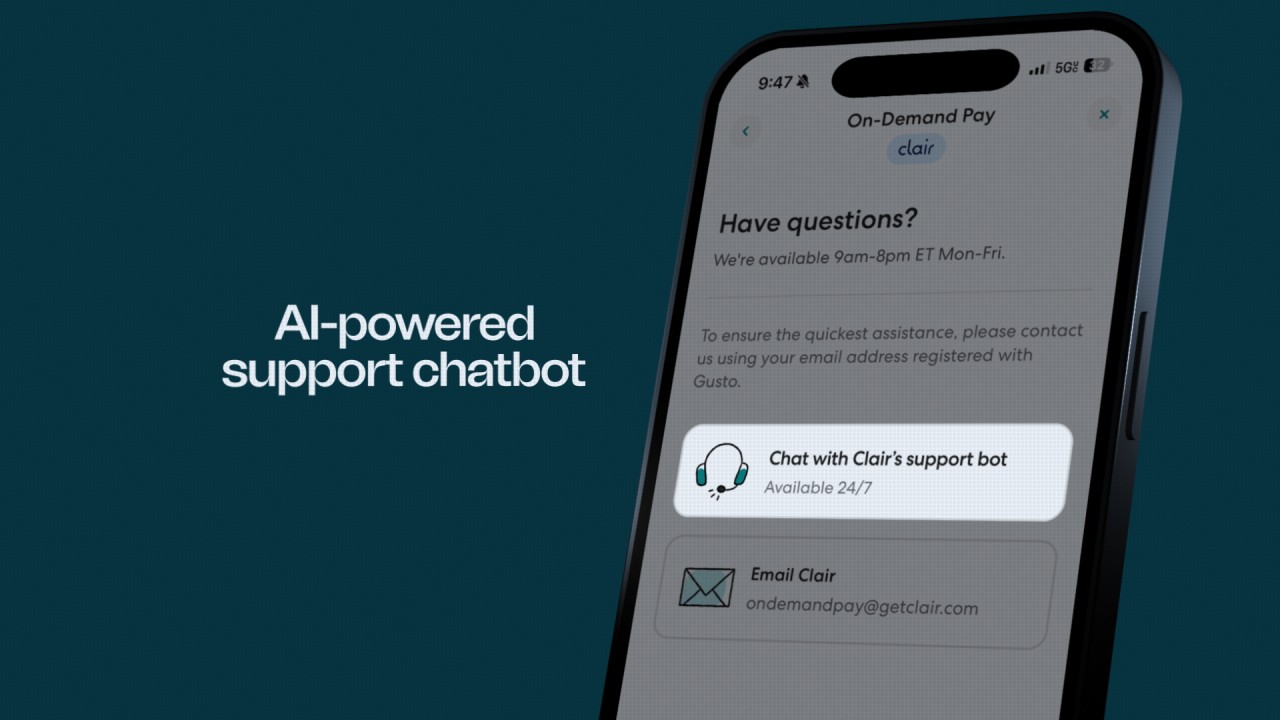
"Agentic AI took our CX program to new heights by allowing us to remain lean on hiring, without needing to hire a lot more headcount or completely replace the human aspect." — Jessie Roberts, Care Operations Lead at Clair
Escalation is a Context Problem, Not a Training Problem
Retail leaders often assume escalations stem from poor agent training. The data suggests a different root cause: 73% of organizations report that escalations frequently happen due to missing tools or incomplete customer history, while 44% cite poor handoffs as a recurring issue in production AI.
When 48% of shoppers have to repeat themselves across touchpoints, it signals a systemic failure in contextual handoffs. This distinction is critical for budget allocation. Coaching cannot help an agent who is forced to start from scratch on a case that is already three touchpoints deep.
Equipping agents with real-time context doesn't just improve resolution rates—it transforms the employee experience. Frontline support teams spend their days handling high-stakes, emotionally charged issues back-to-back. When agents are armed with complete customer histories and actionable insights, they can resolve complex issues faster, dramatically reducing daily stress and burnout.
Give Agents the Context and Tools They Need to Take Action
Agent-facing AI closes that gap by surfacing full account history, past interactions, order updates, and relevant policies before the agent even greets the customer. Rather than reconstructing the customer’s journey from scratch, agents can move straight to executing a resolution.
When AI provides contextual grounding and workflow integration, the impact on efficiency and customer satisfaction is immediate:
- Birdy Grey automated 45% of incoming volume while giving human agents the tools to handle complex event-driven delays. By eliminating repetitive manual steps, they saw a +16 point increase in instant resolution rates and raised their CSAT to 4.2.
- Cotopaxi leveraged contextual AI automation across channels to absorb seasonal spikes without adding headcount, achieving a 168% ROI in six months and saving over 2,000 agent hours.
The benefit extends beyond faster handle times. When agents have the right context readily available, they deliver a consistent experience no matter who picks up the conversation. This matters enormously during peak retail and holiday surges, when brands rely heavily on seasonal teams who may lack years of institutional knowledge.
The Agent Desktop Deserves the Next AI Investment
Deflecting simple volume away from human agents will always have a place. Repetitive requests such as order status checks, return eligibility, or shipping windows are well suited for full self-service automation.
However, as 73.9% of programs with action-taking AI report improving resolution rates, compared to just 43.2% for passive, assistive tools, the competitive edge is shifting.
As self-service experiences absorb routine volume, the biggest gains will come from equipping human agents to resolve complex, multi-touch conversations with complete context from the second they engage. That is what lets a case close in one conversation instead of forcing the customer to start over.
Automation made it possible to give customers quick answers. The next phase of retail CX is ensuring the agent desktop has the context, intelligence, and tools to take the conversation the rest of the way.
Hashtags blocks for sticky navbar (visible only for admin)
{{resource-cta}}
{{resource-cta-horizontal}}
{{authors-one-in-row}}
.avif)
{{authors-two-in-row}}
{{download-the-report}}
{{cs-card}}