As 2026 Holidays Approach, Agentic Shopping Can Earn a Bigger Role
A holiday wishlist can feel like a second job. When all goes well, people find the perfect gift at a great price for each loved one on their list. But sometimes they need a little extra help to get there. That makes the 2026 holiday season agentic shopping’s time to shine.
Consumers already recognize the many ways AI can improve their shopping experience. More than six in ten are prepared to trust AI with at least some of their holiday purchases, and many are comfortable using agentic tools across the shopping journey. If AI comes through for them this winter, they may give it a bigger role in the months beyond.
Agentic shopping will build this trust one experience at a time. That includes providing time-saving help with brainstorming, coupon-hunting, and price-tracking, as well as easing common annoyances by resolving issues, simplifying returns, and getting ahead of delivery problems. As AI handles these tasks successfully, it can earn opportunities to handle more complex needs and higher-ticket purchases.
In this report, we’ll explore new findings on where consumers welcome AI in their shopping journey, the time and money they expect it to save, which experiences still frustrate them, and how retailers can earn a bigger role for AI agents moving forward.
AI earns trust from the bottom up
Shoppers have a lot to do before they reach the point of making a purchase. Finding the right item at the best price can take a lot of work, and many consumers welcome help from agentic shopping tools. 57% trust AI with price-tracking, 42% with finding coupon codes, and 41% with brainstorming. As they work their way through a long wishlist, that can add up to real savings in time and money.
In fact, customers have clear expectations for the value agentic shopping will deliver this season. 53% of consumers say that AI will shave at least an hour off their gift-hunting rounds, and 24% expect to save at least three hours. That’s enough time to fit in an extra holiday movie with the kids—or sneak off for a well-earned peppermint mochaccino.
Consumers see AI shopping tools as a potential source of financial relief as well. More than half estimate that these tools will save them at least $100 this holiday season, and 12% expect AI to lower their costs by at least $500. The average anticipated savings is $192, enough to put a no-compromises holiday meal on the table.
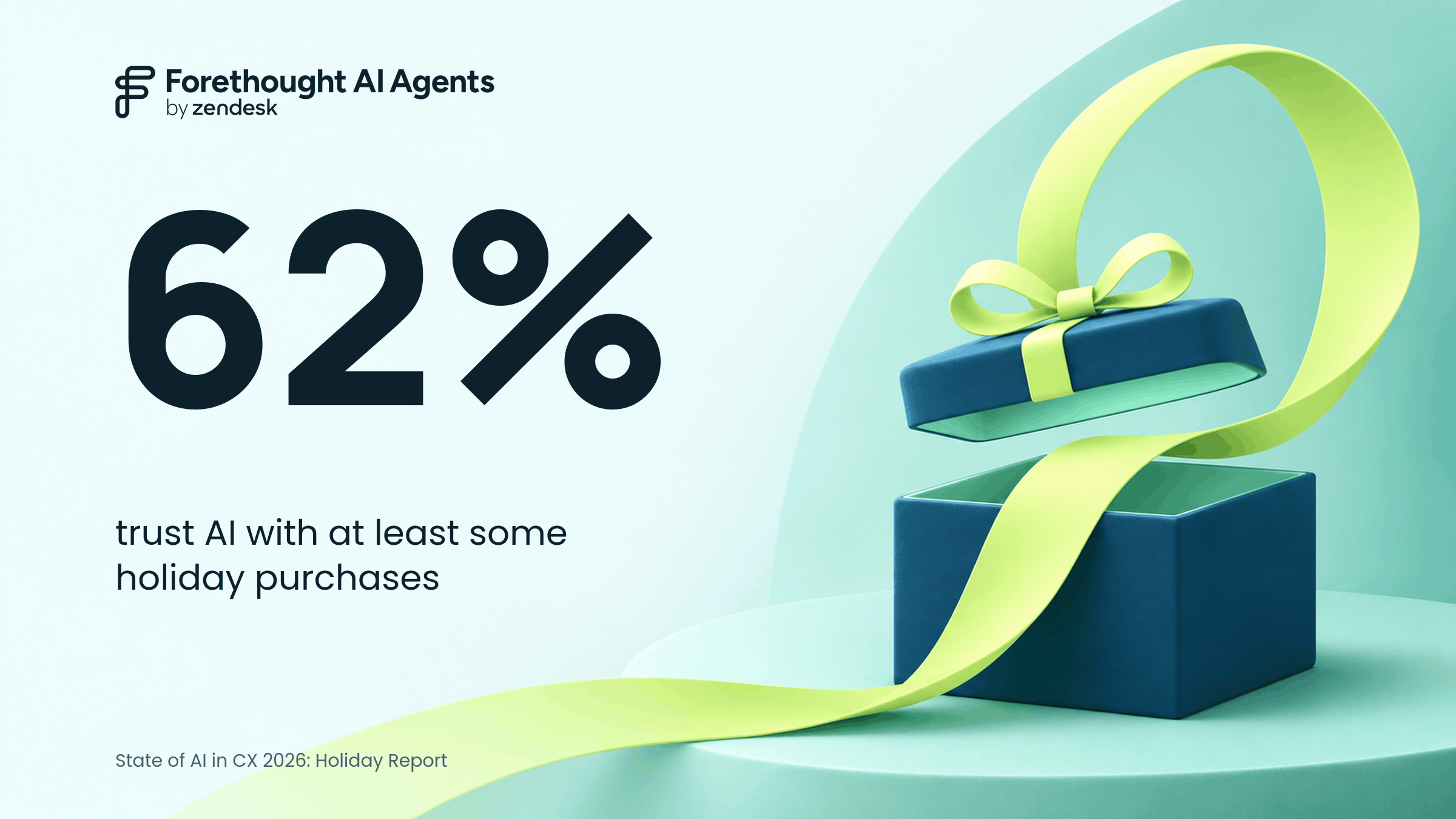
Confidence in AI shopping tools can extend all the way to checkout. A majority of consumers (62%) are willing to let AI make some purchases directly, though only 18% trust it with purchasing authority for goods that cost over $500. Delivering great experiences with smaller purchases can help brands earn the opportunity to handle higher-ticket ones.
A majority of consumers also welcome AI recommendations. If an AI agent surfaced a purchase suggestion based on their past shopping preferences, most would be either excited (29%) or intrigued (44%). A similar story emerges with auto-generated personalized gift guides, with 65% of shoppers at least somewhat comfortable with having their browsing history used in this way. This tracks with our 2025 finding that 62% of customers were open to AI using their personal data under strict conditions to improve customer service.
But quality matters. 15% of consumers say that buying the wrong item based on a bad AI recommendation would ruin their holiday shopping experience more than anything else. Getting it right is key.
What matters is solving the problem, not who (or what) does it
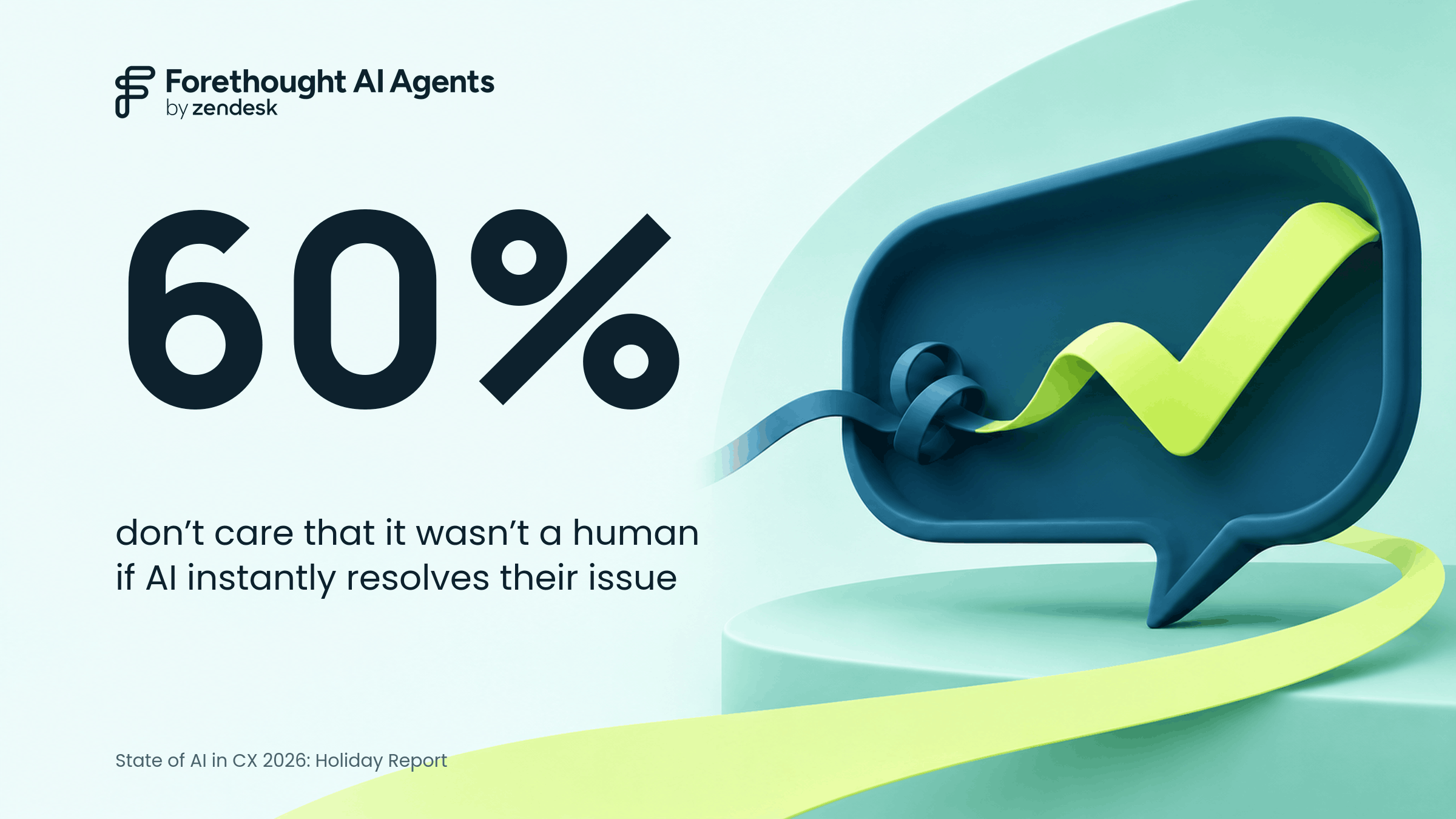
When a problem arises, what matters to shoppers is getting it resolved—however that happens. Consumers are evenly split on their preference for an instant AI response versus waiting for a human response that might take 24 hours to come, but if AI instantly resolves the issue, 60% don’t care that a human agent wasn’t involved. Speed still counts, though. During peak holiday season, 44% will wait less than 30 minutes for customer support before canceling their order or shopping elsewhere, and only 7% are willing to wait more than two hours.
That’s where retailers have room to improve. Nearly three-quarters (72%) of shoppers have been frustrated by a bot that couldn’t understand their issue, and challenges reaching a human when needed ranked as the number-one consumer frustration in our 2024 and 2025 surveys. 41% of consumers have abandoned an online shopping cart because a chatbot failed to answer a basic question about shipping or inventory, turning an impending purchase into a lost opportunity.
To solve problems quickly and effectively, brands need AI that can actually close out a request, not leave consumers chatting in circles or starting over in a different queue.
Returns can be frustrating, but AI beats making a trip
Nobody loves having to send back a gift. Asked about their biggest friction points dealing with a holiday return, consumer responses clustered closely around familiar peeves including long lines, waiting for refunds, a lack of customer support, and complex return policies.
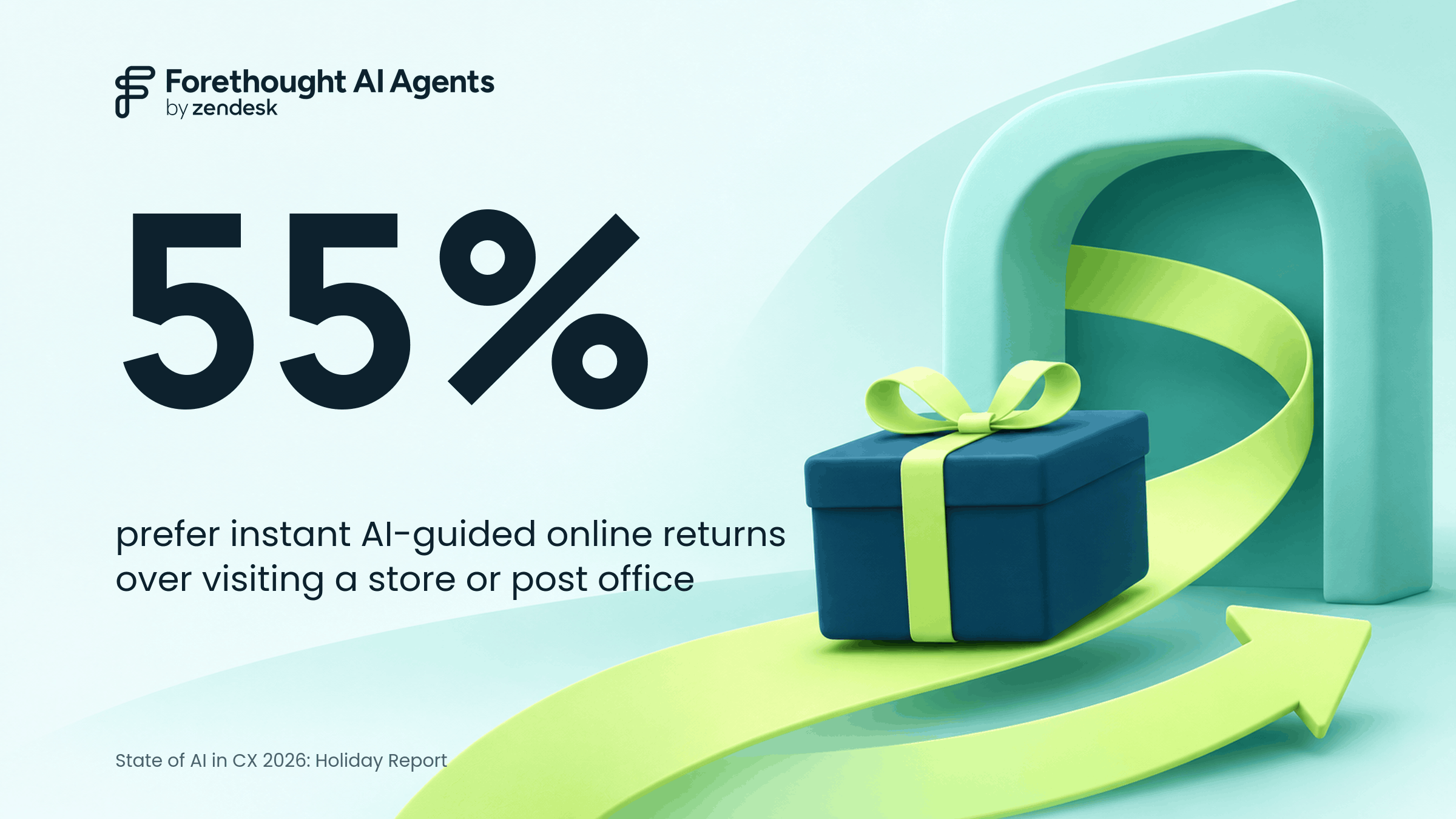
“The returns experience is influencing the purchase well before a return ever happens,” says Tim Fehr, Chief Growth Officer of Happy Returns. "According to the data from our latest returns study, Returns Happen 2026, we know that 81% of shoppers check a retailer’s return policy before buying, and 87% say they are more likely to shop with a retailer offering free returns, immediate refunds, and no packaging or printing. During peak season, when shoppers are buying more and have less time, a convenient return option can provide the confidence to complete a purchase—while a costly or complicated policy can send them elsewhere.” When AI offers that better option, customers are eager to grab it. 55% of consumers prefer an instant AI-guided return process online over a visit to a store or post office.
Other customer experience breakdowns can keep people from getting a refund at all. A majority (55%) have kept a late holiday gift because they missed the return window due to poor support communication. And sometimes they don’t bother trying. 75% of shoppers are at least somewhat likely to keep an item they’re unhappy with if the return process is too complicated.
These scenarios might seem like a win for the retailer, who gets to keep revenue that would otherwise go back to the shopper, but it’s a major loss in the long term. Customers who feel burned once are unlikely to risk another purchase from the same brand, and public venting on social media can turn one shopper’s bad experience into a spreading reputational problem.
For both brands and customers, no amount of friction should be taken for granted. Retailers should build modular AI that takes action and follows the shopper from discovery through delivery and support, with AI-guided return flows that ensure that even people who don’t keep their purchases become satisfied customers.
AI promises still count
If a chatbot makes a promise it fails to keep, an overwhelming 82% of shoppers expect the brand to honor it with a refund or credit. As seen in high-profile incidents such as Air Canada’s bereavement fare policy meltdown, trying to walk back a bot’s assurances can put the company in a bad light.
This points to the need for airtight guardrails governing AI agent behavior and accuracy checks on anything a brand’s AI commits to. Nothing erodes trust faster than a broken promise.
Proactive problem-solving builds loyalty
Shipping delays can be unavoidable during the holidays due to winter storms, high volume in carrier networks, and other operational curveballs. For stressed-out holiday shoppers, a missed delivery date can be panic-inducing. Getting ahead of the issue with a proactive AI notification and fix can help defuse the problem—and even turn the situation into a net positive.
“During the holiday season, our members become very focused on timing—when will their items arrive, will their order get there in time for the holidays, when will their refund be posted,” says Maria Vargas, Senior Vice President, Member Services at Rue La La. “This makes proactive communications the best tool you have to keep the member informed about possible delays to their delivery date. This gives them time to find an alternative and your team the opportunity to find a solution.”
Our survey shows the impact of this strategy. Half of shoppers say they’d be more loyal to a brand whose AI proactively flags a delivery delay and offers a fix such as free expedited shipping. Brands should treat proactive AI service as an investment in customer loyalty.
Giving the gift of satisfaction during the 2026 holiday season
With consumers ready to rely on AI in this year’s gift-shopping journey, retailers have an important opportunity to prove the value of these experiences. If they enable the savings in time and money shoppers expect, ease peak-season friction, and provide high-quality experiences, they can build customers’ trust in their AI agents and loyalty for their brand.
For retailers seeking to deliver satisfaction while increasing the value of their AI investment, the playbook for this year’s holiday shopping season includes:
- Building autonomy from the ground up. Consumers are already embracing AI for key gift-hunting needs like price-tracking and coupon-hunting. By delivering a great experience with these tasks, retailers can earn their trust to give AI shopping tools an even greater role in the future.
- Prioritizing resolution over speed. Instant access to support is important, but resolution matters even more. Retailers should focus on deploying AI agents that can understand shopper needs on the first try and close their case end-to-end.
- Protecting trust with guardrails. With most consumers expecting brands to honor a promise made by an AI agent, AI accuracy can affect both reputation and revenue. Strict guardrails and policy checks can keep AI agents from making promises that the business doesn’t want to keep.
- Turning friction into loyalty. Service breakdowns are a fact of life for most retailers during the holiday season. Instead of leaving customers to wait and wonder, brands can build goodwill and loyalty with proactive notifications and instant remedies like free shipping.
The AI shopping experiences consumers have in the next few months will influence the way they view these tools in the year to come. In that sense, preparations for the 2027 holidays begin now.
Methodology
The results in this report are from an online survey of 1,039 U.S. adults aged 18 and up that was fielded from September 4 to 8, 2026. The data was weighted to the U.S. population by 9 demographic questions. The credibility interval for questions answered by all respondents is ±4 percentage points.
Hashtags blocks for sticky navbar (visible only for admin)
{{resource-cta}}
{{resource-cta-horizontal}}
{{authors-one-in-row}}

{{authors-two-in-row}}
{{download-the-report}}
{{cs-card}}